


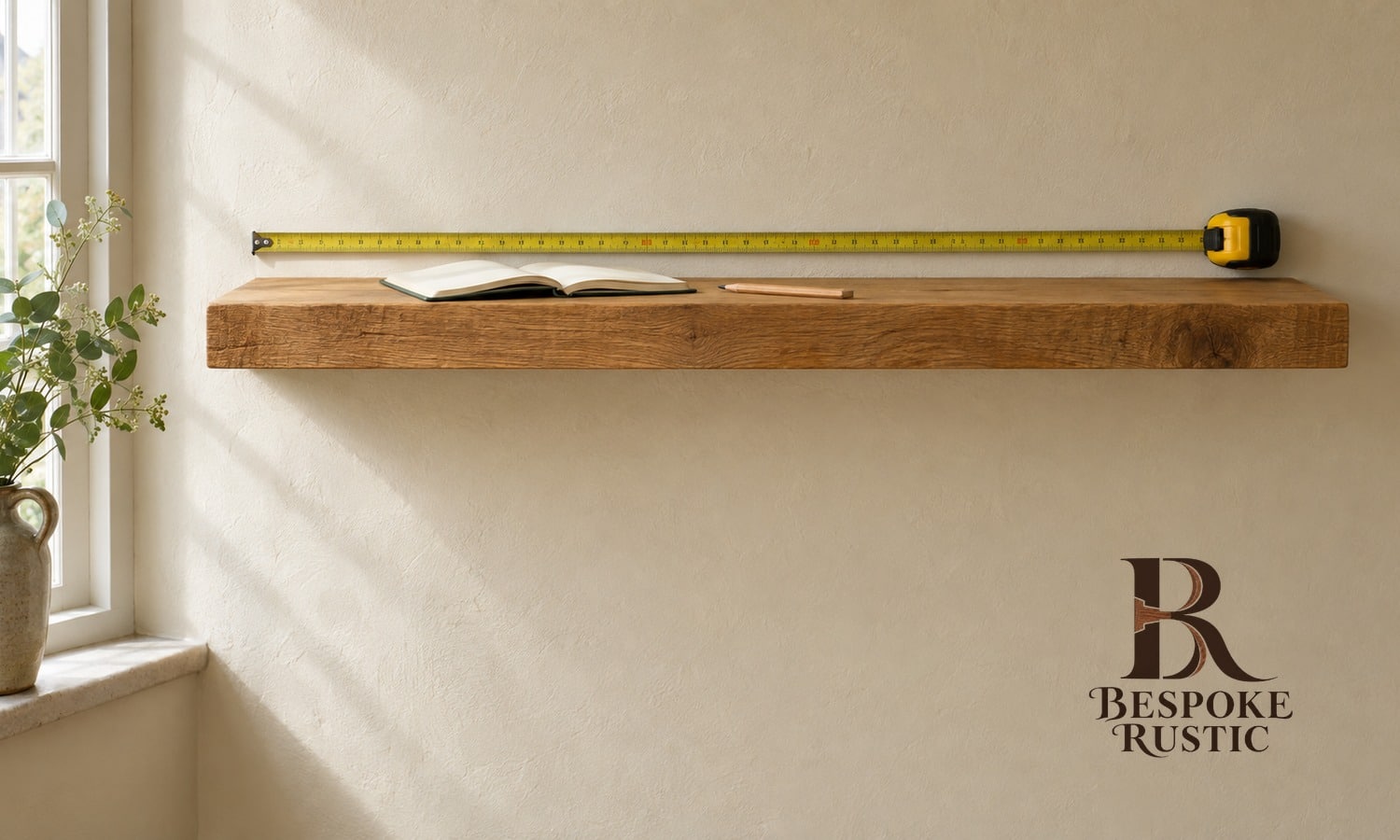

Choosing the length of a shelf is easy. You measure the gap, you write down the number, job done. Choosing the wood stain is the part people agonise over, and rightly so, because the finish is what you will actually look at every day for the next twenty years.
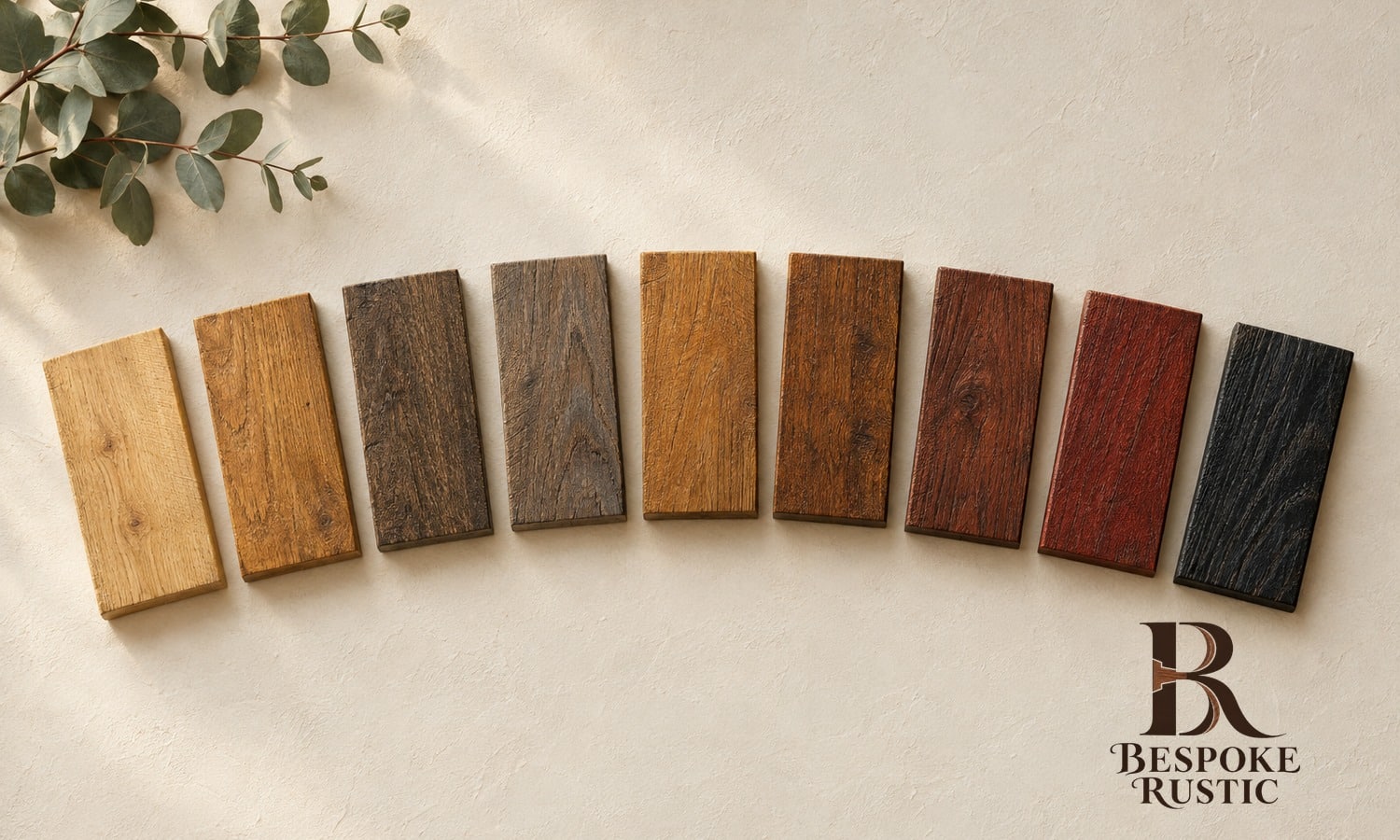
We offer nine finishes, from the palest Light Oak through to a near black Ebony. Here is how to work out which one belongs in your room, without ordering blind and hoping.
Start with the light, not the colour chart
Before you look at a single finish, look at your room. Which way does the window face, and how much daylight actually reaches the wall where the shelf is going?
A north facing room in Britain gets cool, indirect light for most of the year. Dark finishes in that light can go flat and slightly grey, losing the warmth that made them appealing in the first place. South facing rooms get warm light that flatters almost everything, and will gently lift a darker stain rather than deadening it.
If the wall is in shadow, in a hallway, an alcove beside a chimney breast, or under a stairwell, lean lighter than you think you need. A shelf you cannot really see is a shelf that is doing half its job.
Match the undertone, not just the shade
The most common mistake is matching darkness and ignoring undertone. Someone has mid brown floorboards, so they order a mid brown shelf, and the two fight each other across the room because one is cool and one is warm.
Our finishes fall into three families. The oaks, Light Oak, Medium Oak and Dark Oak, are your neutral to honey warm tones, and they are the safest match for most British interiors. Walnut and Ebony are the cooler, more contemporary options, with grey and near black depths rather than orange warmth. Mahogany, Red Mahogany, Light Teak and Dark Teak carry a distinct red or amber undertone, which is beautiful in the right room and jarring in the wrong one.
Hold something you already own next to the wall, a picture frame, a piece of skirting, the edge of the floor, and ask whether it leans orange, red, or grey. Then choose from the family that agrees with it.
The nine finishes, and where each one works
Light Oak is the pale, airy option. It bounces light around, makes small spaces feel bigger, and works beautifully in Scandinavian leaning interiors, bathrooms, and kitchens with white or pale grey units. It is also the most forgiving choice if you are unsure, because it reads almost as a neutral.
Medium Oak is our most popular finish, and with good reason. It is the classic honey oak tone most people picture when they think of a rustic wooden shelf. It sits happily with cream walls, exposed brick, farmhouse kitchens and period features, and it flatters warm light.
Dark Oak gives you depth and a slightly aged, reclaimed look without going all the way to black. Excellent in a living room with plenty of light, or anywhere you want the shelf to read as a deliberate feature rather than blending in.
Walnut is the sophisticated one. Cooler and greyer than the oaks, with real richness to it, and the natural partner for modern greens, deep blues and charcoal walls. If your room leans contemporary rather than country, start here.
Mahogany brings a traditional reddish brown warmth, the tone of proper period furniture. It belongs in rooms with existing dark wood, in studies and snugs, and in older homes with original features. It will look out of place against cool greys.
Red Mahogany pushes that red further, and it is unapologetic about it. Choose it when you want warmth and character rather than restraint, and when nothing else in the room is competing on the red front.
Light Teak is a golden amber, sunnier than Light Oak and with more of a mid century feel. Good with rattan, brass, mustard and tan leather.
Dark Teak is deeper and browner while keeping that amber glow. A strong choice for a warm, layered room where you want richness without the red of mahogany.
Ebony is the boldest option, close to black, with the grain still visible through the finish. Against pale plaster or a white wall it is striking, graphic and thoroughly modern. Against dark walls it disappears, so use it for contrast, not camouflage.
Contrast or blend, and how to decide
Ask yourself one question. Do you want the shelf to be noticed, or do you want what is on it to be noticed?
If you want the shelf itself to be a feature, go for contrast. Ebony or Walnut against cream plaster, or Light Oak against a deep green wall, will draw the eye straight to it.
If the shelf is there to display things, books, plants, pottery, photographs, then blend. A finish within a couple of tones of your walls or floor lets the shelf recede and the contents take over. This is usually the right call for kitchens and busy family spaces, where there is already plenty going on.
Matching wood you already have
Trying to match an existing floor, a beam, or a fitted cupboard is harder than it sounds, because the wood you are matching has aged, and it was probably a different species to begin with.
A near match is often worse than a deliberate difference. If you cannot get within a shade or two, it usually looks more considered to pick a clear contrast instead, and let the two read as separate elements rather than a failed match.
One thing worth knowing is that timber darkens a little as it settles, so a finish that looks fractionally too light on day one will very often be exactly right in six months.
Room by room, the short version
In kitchens, Medium Oak and Light Oak sit well with almost any unit colour, and hide dust and flour better than the very dark finishes. In bathrooms, lighter oaks keep the space feeling clean and bright. In living rooms, you have the most freedom, so this is where Walnut, Dark Oak and Ebony earn their keep. In hallways, which are usually darker and narrower than we remember, go lighter than instinct suggests. In bedrooms, warmer finishes, Medium Oak, Dark Teak and Mahogany, do more for the mood than the cooler greys.
Still torn between two finishes?
Then choose based on the room’s light rather than the photograph on your screen, because every screen renders warm browns differently and none of them are showing you your own walls.
Every shelf we make is stained and finished by hand here in the UK, so if you are weighing up two options, tell us which room it is for, which way the window faces, and what else is in there. We would far rather help you pick before we start cutting than have you settle for a finish you are not sure about.